
 EN
EN
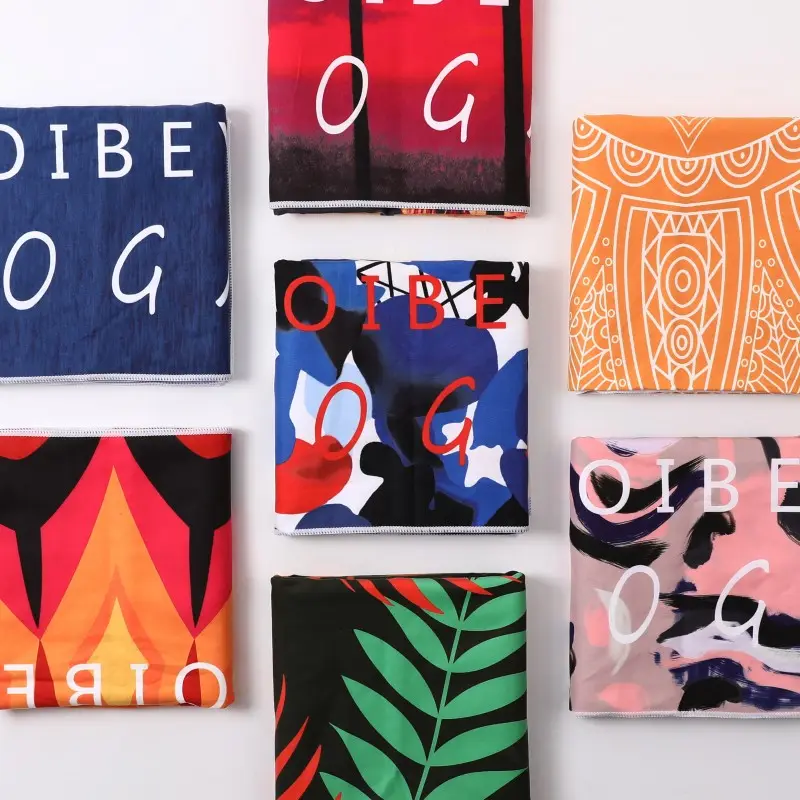
Maintaining proper alignment and posture during exercise is one of the most critical factors in both performance and injury prevention. Whether you practice Bikram yoga, heated vinyasa flow, or any form of hot yoga, the conditions inside a heated studio introduce unique challenges that standard yoga mats and accessories simply cannot fully address. Sweat accumulates rapidly, surfaces become slippery, and your ability to hold precise positions becomes compromised. This is precisely where the role of a hot yoga towel becomes not just convenient, but functionally essential to how your body moves and aligns during every session.
A hot yoga towel is far more than a moisture-absorbing layer placed over your mat. It is a purpose-engineered practice tool that directly influences how your hands, feet, and body engage with the surface beneath you. When your foundation is stable and grip is reliable, your nervous system can release excess tension and your joints can track properly through each movement. Understanding the specific mechanisms by which a hot yoga towel supports alignment and posture reveals why serious practitioners consistently consider it indispensable equipment in their studio kit.
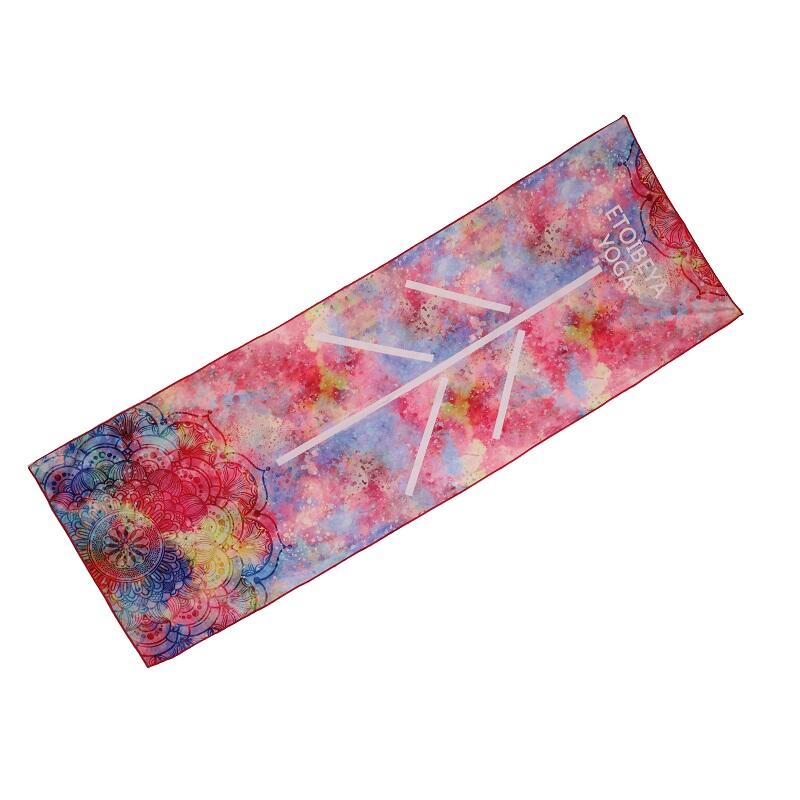
The Connection Between Surface Grip and Structural Alignment
How Grip Stability Enables Proper Joint Tracking
When your hands or feet slip even slightly during a yoga posture, your entire kinetic chain responds with compensatory tension. The ankle shifts outward to recover balance, the knee follows, and the hip rotates asymmetrically to maintain stability. These micro-compensations happen so quickly they often go unnoticed in the moment, but over time they accumulate into postural imbalances and habitual misalignments. A hot yoga towel with a non-slip surface interrupts this compensatory cycle before it begins by giving your limbs a trustworthy foundation to push into and ground through.
In heated environments, moisture dramatically reduces the friction coefficient of standard mat surfaces. A high-quality hot yoga towel is specifically designed with materials that activate grip as perspiration increases rather than diminishing it. This reactive grip property means that the harder and longer you practice, the more reliable your contact surface becomes. This allows your weight-bearing joints to stack correctly and your muscles to engage through their full intended range rather than recruiting stabilizers to compensate for an unstable base.
Posture Reinforcement Through Consistent Tactile Feedback
Touch and pressure feedback from the surface beneath you is a primary source of proprioceptive input during exercise. The brain uses this information to continuously calculate your body's position in space and make micro-corrections to posture. A hot yoga towel provides a consistent, predictable tactile environment that enhances the quality of this feedback. When the surface is slippery and unreliable, proprioceptive signals become noisy and the brain must dedicate more cognitive bandwidth to stability management rather than movement refinement.
The dense microfiber construction common in premium hot yoga towel designs creates uniform surface contact that distributes pressure evenly across the palms and soles. This even distribution prevents focal pressure points that can skew weight loading to one side of a limb, which is a common driver of asymmetric posture patterns. Practitioners who regularly train with a hot yoga towel often report a measurable improvement in their ability to feel and correct alignment errors in real time because the quality of their proprioceptive input has improved.
Moisture Management and Its Direct Impact on Posture Control
How Sweat Accumulation Destabilizes Movement Mechanics
In a hot yoga class, the body can produce substantial sweat output within the first fifteen minutes of practice. Without an appropriate hot yoga towel in place, this moisture pools on the mat surface and creates an unpredictable, inconsistently slippery layer. Practitioners must then constantly recalibrate their balance, which means they are never fully inhabiting the intended position of each asana. The mental and muscular energy spent managing this instability directly detracts from the precision of posture execution.
A well-designed hot yoga towel absorbs perspiration away from the contact surface and distributes it through the towel's fiber structure before it can compromise grip. This moisture-wicking function keeps the active surface layer in a predictable, grippy state throughout the class. Practitioners can therefore commit their full physical attention to articulating their spines, activating their deep stabilizers, and aligning their joints rather than simply trying not to fall. The indirect benefit to posture quality from this moisture management alone is substantial and often underappreciated.
Temperature Regulation and Muscle Function in Hot Environments
Heat itself has a dual relationship with posture and alignment. While warmth increases muscular pliability and allows joints to move through greater ranges, excessive surface heat transmitted through a thin or absent barrier can cause localized discomfort that distorts body positioning. A hot yoga towel creates a thermal buffer between your skin and the mat surface, moderating the heat experienced at the contact points and allowing the body to settle into postures without the reflexive withdrawal response triggered by uncomfortable surface temperatures.
When muscles are not distracted by thermal discomfort at pressure points, they can fully release into lengthened positions and accept the alignment corrections that the practice is designed to produce. This is particularly relevant in seated and supine postures where sustained contact with the mat is required. The hot yoga towel's role as a thermal moderator is therefore a meaningful contributor to the quality of alignment achieved over the course of an extended session.
Structural Support for Specific Alignment Demands
Standing Postures and Lower-Body Alignment
Standing postures place the highest alignment demands on the lower kinetic chain. The feet must spread actively, the arches must engage, and the weight must distribute evenly across the three points of each foot to allow the ankles, knees, and hips to stack in proper anatomical relationship. On a sweaty, slippery mat surface, this active foot engagement is almost impossible to sustain because the toes cannot grip and the heel cannot anchor. A hot yoga towel restores the ability to actively grip the surface, which in turn activates the intrinsic foot muscles that are the foundation of lower-body alignment.
The improved lower-body alignment that results from secure footing with a hot yoga towel creates a chain reaction upward through the body. The knee tracks over the second toe rather than collapsing inward. The hip bones level out rather than tilting to one side. The lumbar spine can maintain its natural curvature rather than flattening or hyperextending to compensate for instability below. In practical terms, this means that working with a hot yoga towel in standing sequences allows practitioners to experience the actual intended alignment of the posture rather than a compensated version of it.
Floor-Based and Inverted Postures
In floor-based postures, the quality of the surface beneath the hands and knees determines how effectively force can be transmitted through the limbs to support spinal alignment. Downward-facing dog, plank variations, and table-top positions all require firm hand and knee contact to allow the shoulder girdle and core to engage properly. On a wet mat without a hot yoga towel, hand placement becomes tentative and uncertain, causing the shoulders to hunch and the spine to round rather than extending in the correct alignment.
A hot yoga towel provides the secure contact surface that allows full weight-bearing into the hands and knees without fear of slipping. This security enables the scapulae to draw correctly toward the spine, the thoracic spine to extend, and the neck to maintain its natural alignment as an extension of the rest of the vertebral column. The accumulative effect across an entire class of floor-based work is a meaningful improvement in spinal extension patterns and upper-body postural control that practitioners carry beyond the studio.
Long-Term Postural Adaptation and Practice Quality
Building Correct Movement Patterns Over Time
Posture is not a static state but a dynamic habit shaped by the movement patterns your body rehearses repeatedly. Every yoga session is an opportunity to either reinforce optimal alignment patterns or embed compensatory ones. When you consistently practice with a hot yoga towel that provides reliable grip and moisture management, you are consistently rehearsing the correct version of each posture. Over weeks and months, these correct patterns become the default neuromuscular program your body uses not only on the mat but in everyday movement.
Conversely, practicing repeatedly without a hot yoga towel in heated conditions often means rehearsing compensated, slightly misaligned versions of postures. The grip-searching tension in the feet, the shoulder-bracing response to an unstable hand position, and the spinal compensation for an insecure standing base all become patterned into the body's movement vocabulary. Investing in a quality hot yoga towel is therefore an investment in the accuracy and long-term value of your practice itself.
Supporting Instructor Cues and Alignment Adjustments
Skilled yoga instructors provide alignment cues that assume the practitioner can act on them with precision. When a teacher says to press evenly through all four corners of the foot, or to draw the front hip back to level the pelvis, these instructions presuppose that the practitioner has a stable enough base to actually execute the adjustment. If the surface is slippery and the student's attention is partially occupied by maintaining balance through grip failure, the capacity to receive and apply alignment instruction is significantly reduced.
A hot yoga towel effectively increases the return on investment of instructor-led teaching by ensuring that students can actually implement the alignment information they receive. The surface reliability that a hot yoga towel provides creates the conditions under which subtle postural corrections become possible. Students progress faster, their alignment improves more durably, and the instructor's technical guidance reaches its full intended impact. This is one reason why thoughtful yoga educators in heated studio environments routinely recommend the hot yoga towel as essential gear rather than optional comfort equipment.
FAQ
Does a hot yoga towel work better than a standard yoga mat for alignment purposes?
A hot yoga towel is designed to complement a yoga mat rather than replace it. In heated, high-sweat conditions, a standard yoga mat alone becomes slippery and unpredictable. The hot yoga towel is placed over the mat to restore grip and moisture management, which together create the stable foundation that alignment and posture work requires. The combination of mat cushioning and towel grip is more effective for alignment in hot yoga than either product alone.
How often should I wash my hot yoga towel to maintain its grip performance?
Washing a hot yoga towel after every practice session is generally recommended. Perspiration, body oils, and residue from personal care products can accumulate in the microfiber surface and reduce its grip and wicking performance over time. Washing the towel regularly not only maintains hygiene but also restores the surface properties that make the hot yoga towel effective for alignment support during practice.
Can a hot yoga towel help with specific postural problems like rounded shoulders?
Indirectly, yes. Rounded shoulders in yoga are often a downstream effect of an insecure hand and upper-body foundation, particularly in weight-bearing postures. When a hot yoga towel provides reliable hand grip, the practitioner can press actively through the palms, engage the serratus anterior, and draw the scapulae into proper position. This chain of muscle activation is the direct mechanism for addressing rounded-shoulder posture in poses like plank, downward dog, and upward dog.
Is a hot yoga towel suitable for beginners or mainly for advanced practitioners?
A hot yoga towel is especially valuable for beginners. Newer practitioners are still learning the alignment principles of each posture and lack the body awareness to make quick compensations when surfaces shift. An unstable, slippery surface in their early practice can lead to the internalization of misaligned movement patterns that are difficult to correct later. By using a hot yoga towel from the very beginning, beginners get accurate tactile feedback and a reliable foundation that allows them to learn correct alignment from their first session.
Table of Contents
- The Connection Between Surface Grip and Structural Alignment
- Moisture Management and Its Direct Impact on Posture Control
- Structural Support for Specific Alignment Demands
- Long-Term Postural Adaptation and Practice Quality
-
FAQ
- Does a hot yoga towel work better than a standard yoga mat for alignment purposes?
- How often should I wash my hot yoga towel to maintain its grip performance?
- Can a hot yoga towel help with specific postural problems like rounded shoulders?
- Is a hot yoga towel suitable for beginners or mainly for advanced practitioners?